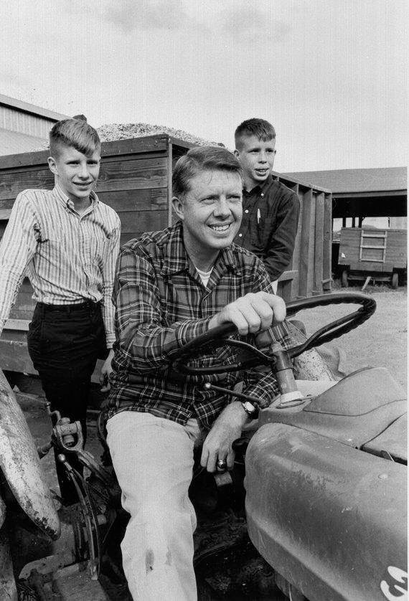
 Citizen Carter, Quite at Home on a Tractor Citizen Carter, Quite at Home on a Tractor Jimmy Carter has been in the news a lot recently. Between carrying on with his Habitat for Humanity projects despite being injured in an accident and he and Mrs. Carter becoming the longest married presidential couple in American history, he’s grabbed a few headlines. So an Australian friend of mine was sharing one of the stories online. I offered my own perspectives as one of Carter’s fellow Georgians. My main point was this: Carter was much less successful in the office of President as he has been in other pursuits. I opined that if we lost his presidency we wouldn’t lose much but that if we lost the other 91 years of his life, we’d be much worse off as a nation. So I asked my friend and his fellow Australians to consider that Carter has been a peanut farmer, a naval officer, a member of his local school board, a Sunday school teacher, a home builder, an educator, a poet, and an author. He’s had a busy life. I noted that he and Mrs. Carter still live in the typical middle class home he built when they returned to Plains, the only home they’ve ever owned. He built much of the furniture in the home, including their bed. They still take their turns cutting grass and cleaning the building at their church. He has helped Habitat for Humanity put roofs over the heads of thousands of people. He helped establish a solar farm that now provides about half the power used in his rural hometown. This man is a walking, talking demonstration of good Southern Agrarian ideals. He really is what people think about when they talk about “servant leadership.” He’s a good, decent, honest, salt of the earth Georgia boy and he’s always looking to pull his own weight and trying to find a way to make this world a better place. 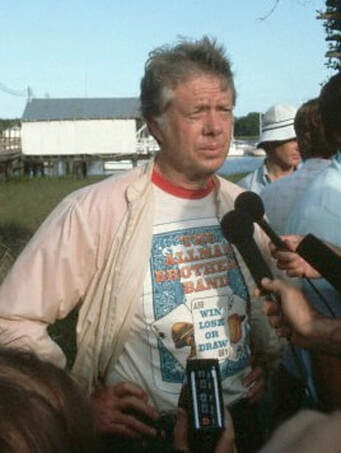 Georgia Boy in an Allman Brothers Band T-shirt Georgia Boy in an Allman Brothers Band T-shirt The impact he has had on his hometown cannot be overstated. Since he was just a kid, he was impacting his neighbors for good. Even without his presidency, Plains would be worse off without him. You really have to go down to Plains and out to his boyhood home near Archer and see it all for yourself to appreciate it. As I was laying all this information out for them, it hit me. We spend so much time and effort worrying about who the president is, who our government leaders are, what party is in power, etc. But we see that Jimmy Carter has done far more as a citizen than he ever did as president. Do the math with me. There’s roughly 350 million Americans and in your lifetime, most likely fewer than 20 of them will ever be president, maybe a dozen or so. That’s a pretty insignificant number in comparison. What we need is less focus on the Oval Office and more focus on the Folks on Main Street. You and I are unlikely to ever be president, and the world will never miss us in that role. But will the world be better because we were citizens? Will our neighbors, our hometowns, our civic organizations, our school boards, our churches, be better because we were here? Are we looking to the leadership of Citizen Carter as he sets an example of how we should serve our terms as citizens? We are the ones who can make a difference. We are the ones who must make a difference. We have to think locally and act locally.
3 Comments
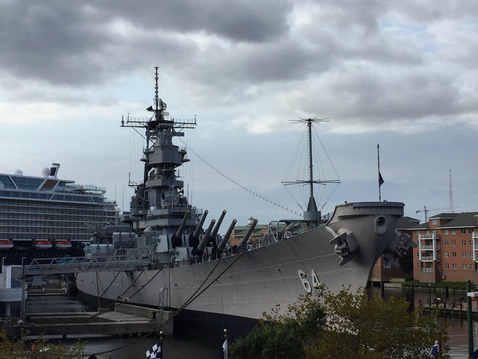 Sam Burnham, Curator A waterfront can be one of the most important assets a city can possess. Be it the sea, a river, bay, or harbor, people are drawn to the point where the land touches the water. If wisely developed and maintained, such an area can be priceless for a municipality. Norfolk, Virginia is an excellent example. The city was gifted custody of the Iowa class battleship USS Wisconsin (BB-64) and they have brilliantly transformed it into a centerpiece in one of the town’s waterfront districts. The ship is partnered with Nauticus, a museum that commemorates the amazing history of “Wisky” as well as the economy and ecology of the Hampton Roads and Chesapeake Bay region. A cruise ship port lies adjacent to the museum. That means tourists who tour the ship and the museum as well as the restaurants and stores that can be found along the neighboring blocks. 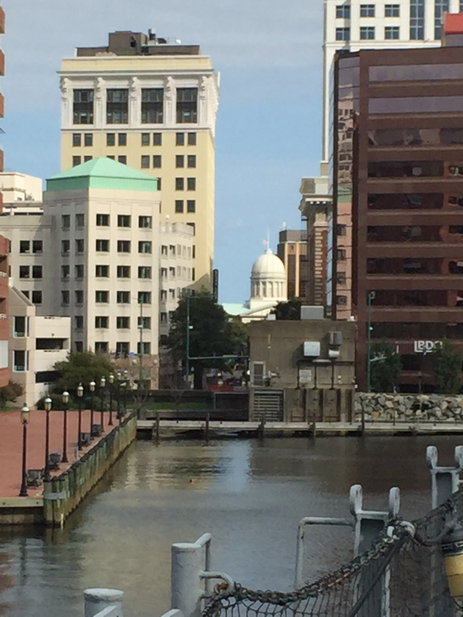 The MacArthur Memorial from the Decks of the Wisconsin The MacArthur Memorial from the Decks of the Wisconsin Norfolk is a modern city, much too busy for my taste, at least on a permanent basis. As a visitor, I really enjoyed this waterfront district. The streets and wide sidewalks were immaculately clean. There were people walking, biking, and riding those Lime scooters around. Get this, the scooters we saw not in use were all properly parked. People want to be in this part of town. There is a vibrant feel and there are jobs, homes, and entertainment all within walking distance of each other. Some of the older architecture includes sites like the U.S. Customs House and the MacArthur Memorial. The latter serves as a repository, museum, and the final resting place of U.S. General Douglas MacArthur. The building is the former city hall and can be seen from the main deck of the Wisconsin. 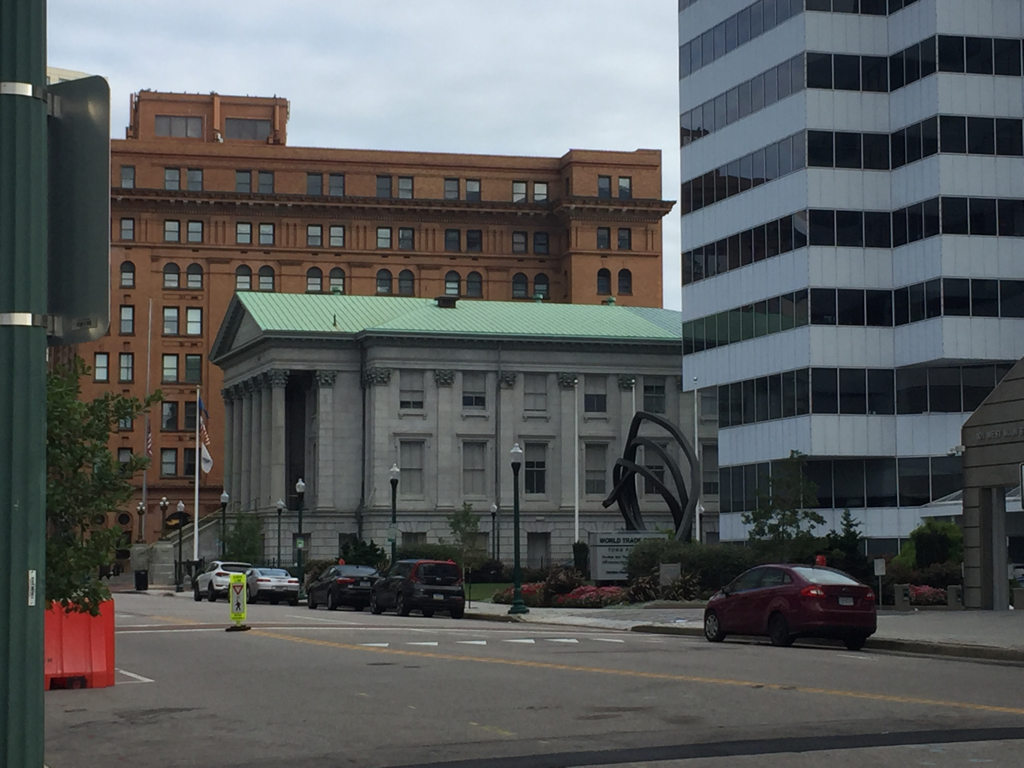 The US Customs House While I’m sure this district is pricey, the condominiums and townhouses we saw are of tasteful design and construction. They all seemed to fit what was going on around them and are built to reasonable scale. While it has to be tempting to try to maximize profits with obnoxiously huge high rise housing units, the waterfront in this district has avoided that blight. With easy access to the parks, museums, attractions of the waterfront and the jobs and entertainment along the city streets, this is a highly desirable area. 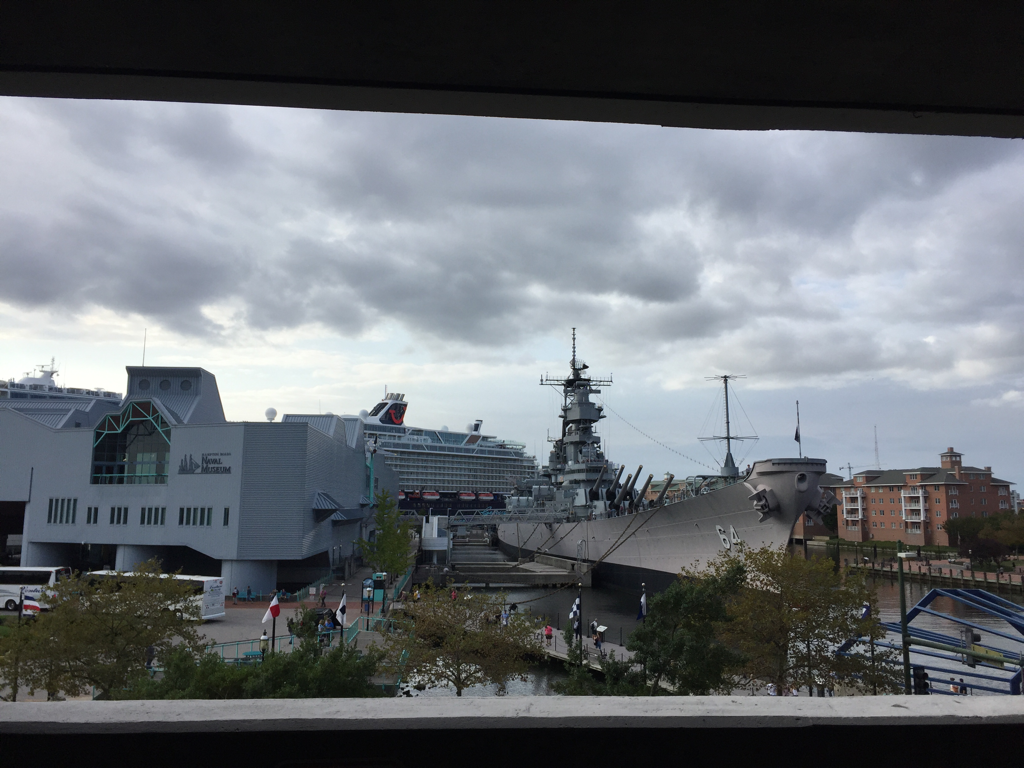 Nauticus & "Wisky" 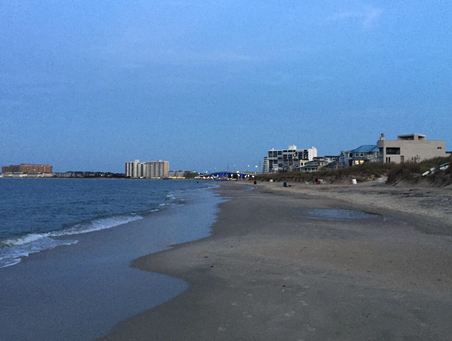 Sam Burnham, Curator To me the Chesapeake has always seemed exotic and distant. I was that kid in school who bemoaned not spending more time on certain areas of the textbook, particularly in history and geography. There was always more I wanted to learn about this body of water and the land that surrounds it. As I flipped the pages on my own, I looked over the maps, read and re-read the passages on the natives and the English settlers. In my youth I met an old man who grew up on these shores. He told me a funny story of the day that he and a friend decided to try to row across the Chesapeake in their small rowboat. He said they actually got pretty far and, once they were found safe, it was the most trouble he ever got in growing up. Then there were stories about crab fishing and also the sportsmen who gave the world the Chesapeake Bay retriever. Fishing, crabbing, hunting, sailing, rowing - all of it is found throughout these waters. 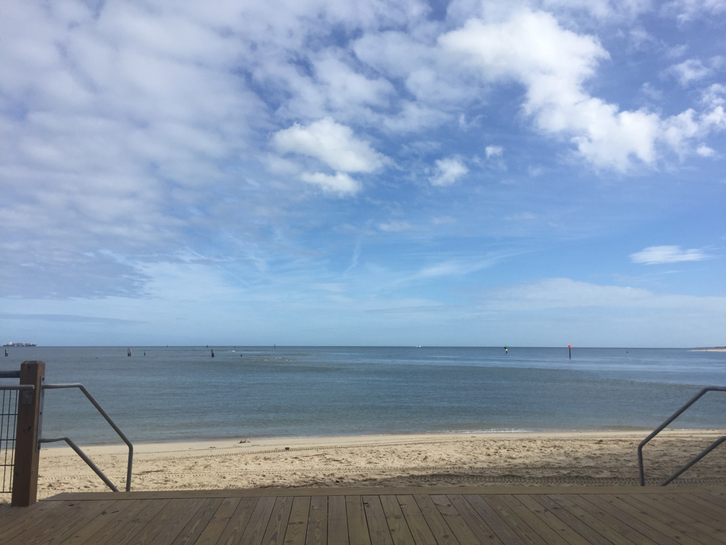 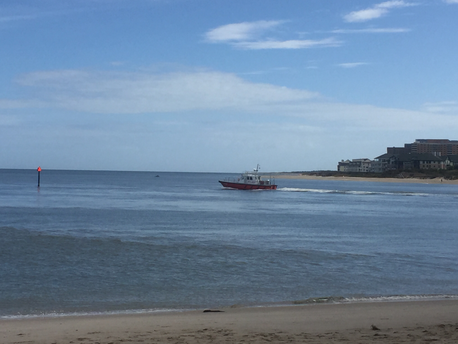 As I write this, I’m sitting on a bench beneath the bridges at Lynn Haven Inlet as the waves on the Chesapeake lap at the sandy shore in front of me. Ships come and go, there’s highway noise above me and a few concrete condominium buildings stand on each side of the inlet. But this is a modern-natural interface. This bay cannot be developed, it cannot be mechanized, it cannot be tamed. Sure, we could poison these waters, we can kill all the life in them but they cannot be controlled. They were here before us, they’ll be here when we are gone. Storm surge and wind could topple every structure here but the bay, however shifted, would remain. The Chesapeake never really seemed to be truly Southern to me...until today. This is where the Jamestown settlers first saw the New World. This is where The South, as we know it, was born and, therefore, where America, as we know it, was born. 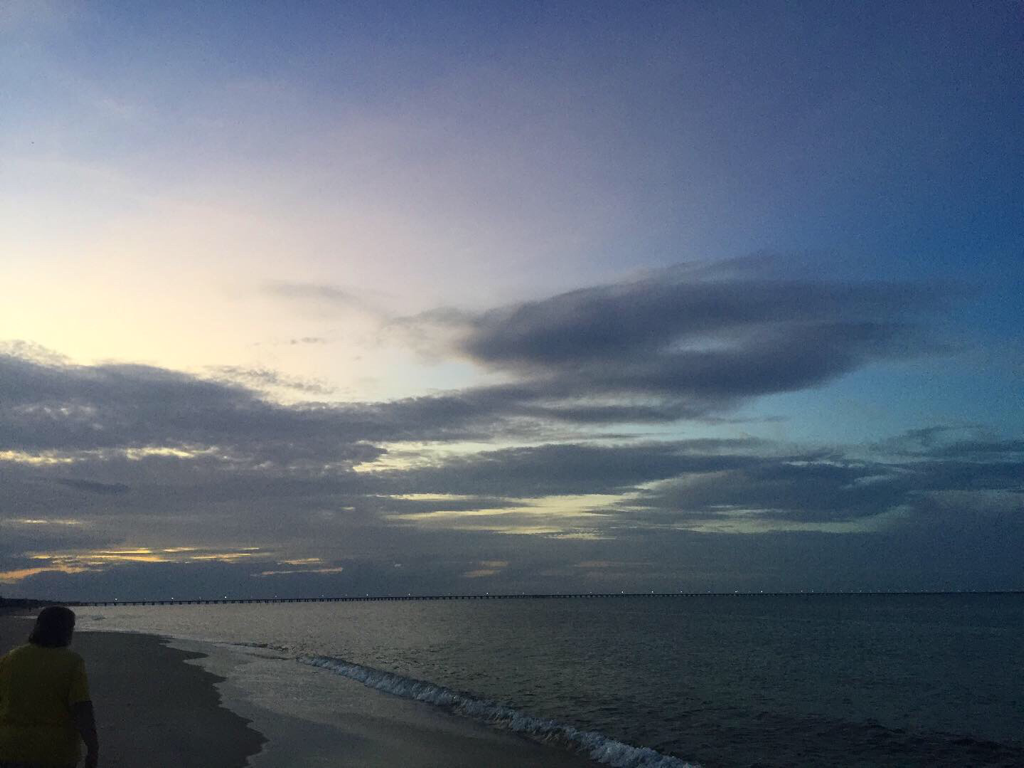 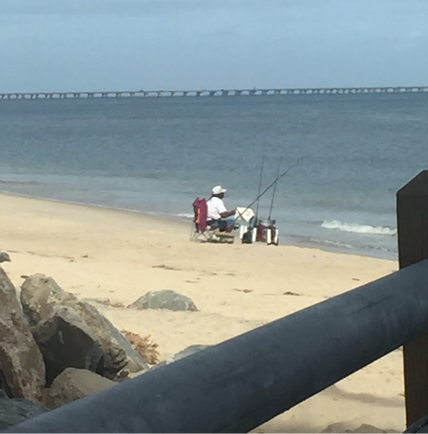 This bay brought settlement. It brought fishing. It brought shipping. It brought the Navy. It brought tourism. As modern and developed as this area might get, this body of water will always dictate the health and vitality of this region. As goes the Chesapeake, so goes the eastern shores of Virginia. That dependence on the landscape, be it water or land, that entwined relationship between work, leisure, life, and nature, that’s where this area becomes Agrarian. That connection to the past, to Jamestown, Williamsburg, Yorktown, that’s what makes it uniquely Southern. There’s too much city here for this to ever be home. But there is too much Chesapeake here for it to ever be anathema. It’s delightful and I do hope the folks zipping up and down I-64 are not overlooking the wonder and beauty that lie just below their noses. 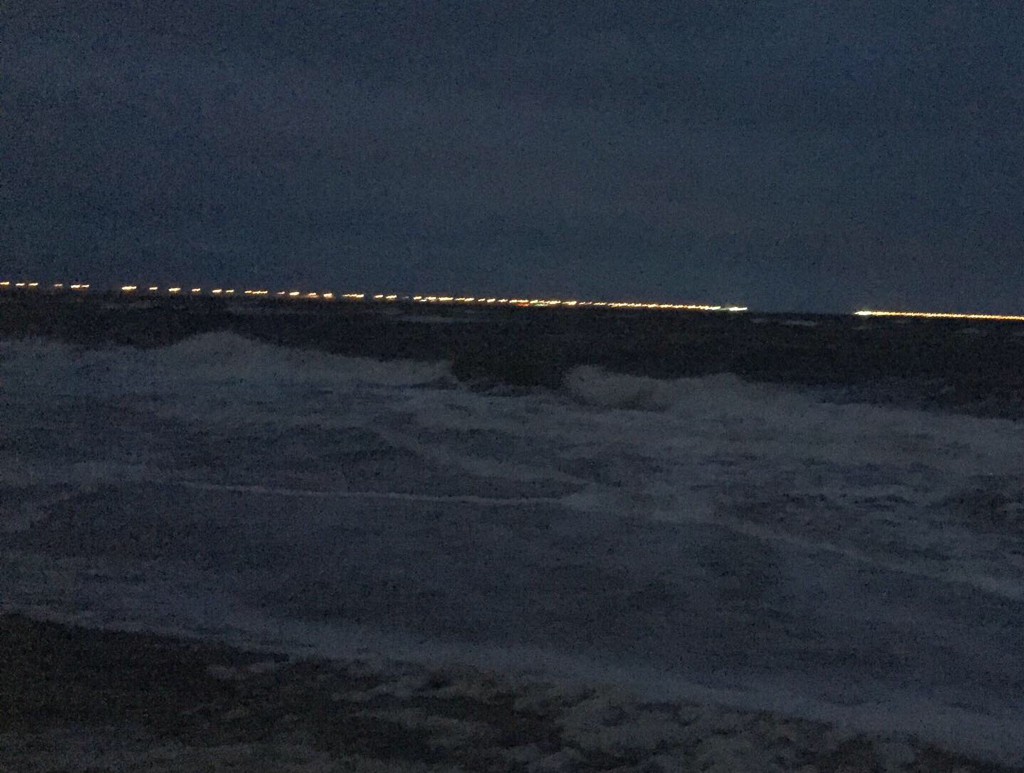 |

Sam B.Historian, self-proclaimed gentleman, agrarian-at-heart, & curator extraordinaire 
ABG Sponsor, Click Here

ABG Sponsor, Click Here
ABG Sponsor - Click for Link
Social Media
Categories
All
Archives
November 2022
|
 RSS Feed