ABG
  • Home
  • Blog
  • Contributors
  • ABG CFB
  • Reference center
  • Contact Us

Cumberland Island

Eclipsing Productivity

8/20/2017

2 Comments

 
By Sam Burnham
@c_SamBurnham

Unless you've been living on the dark side of the moon, you are abundantly aware that on Monday a swath of the country, including north Georgia, will fall into the umbra, the shadow cast by the moon as it passes from sea to shining sea.

Yesterday, while informing myself in the realm of current events, I came across an article by NBC News that "American employers will see at least $694 million in missing output" just in the limited time that employees are expected to spend observing an event not seen in America since 1979. This of course doesn't account for the economic impact of the effort to dislodge consumer dollars via eclipse glasses, t-shirts, novelties, viewing parties, etc.

Traditionally the South is not known for its productivity. In fact, many of our greatest contributions to society have come from people trying to avoid productivity. We are people known to sit on the porch making music, we think of sweating as an activity that doesn't require much movement, and we figured out how to take 12 hours or more to cook a piece of meat. We just are not, historically speaking, a very efficient realm. This fact helped spawn the adage that Washington is a city with Southern efficiency and Northern charm.

So when I see that the US stands to lose that much in productivity, I think "good>" I think it is high time that we reevaluate this whole idea of productivity. We get up before dawn, run around all day trying to get a bunch of stuff done trying to make as much money as we can to buy as much stuff as we can so that we can be as successful as we can before we collapse in bed, exhausted. What we accomplish is filling up landfills with discarded crap that didn't make us happy long, that we bought with whatever money we made by making someone else rich while they try to figure out how to replace us with robots, all while missing out on the marvels of this world that we are gifted with a minute amount of time to enjoy. Then we die.


Ah, the perils of worshiping a free market, of becoming slaves to liberty. We need to look back, see the lessons of the past. We need to harness the power of the free market rather than taking its yoke upon ourselves. We need to find contentment and peace. We need to look for ways to enjoy this life more rather than spend ourselves out while failing to become happier, healthier, or achieving the least bit of increased sanity or inner peace in the process.

Do this tomorrow, but do not let it end there. You have this one life and you only get it once. Go outside. Use eclipse glasses, a cardboard pinhole camera, or whatever other contraption you can conceive to save your eyesight while watching a marvel of science that has amazed people from the very dawn of mankind. Then take time, regularly, to marvel at something. Be amazed at the world we live in. Seek out beauty and harmony. Live a life that is yours and not the chattel of the market or productivity.

2 Comments

Saving Saturday 2017

8/14/2017

0 Comments


(This article appeared in its original form in 2013. It has been edited and updated.)
By Sam Burnham
​@C_SamBurnham

Football has a storied tradition in the South and Georgia is
no exception. This particular story goes back to the days when football was young, back before Southern towns doubled their population on Saturdays in the fall.

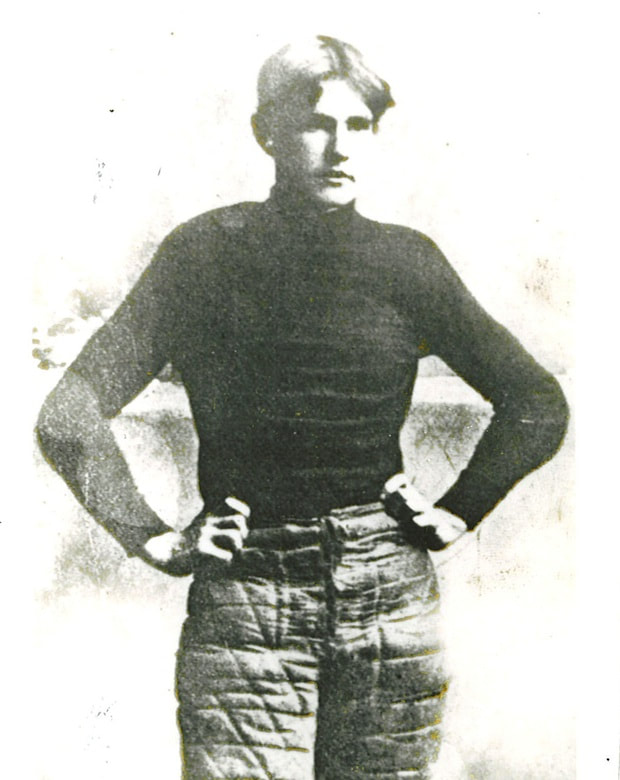
On October 30, 1897 the University of Georgia, before they were known as the Bulldogs, played the University of Virginia. Sometime during the game, a 17-year-old from Rome named Von Gammon was involved in a play that ended violently with a huge pile of players.

When the pile unfolded, Von Gammon remained motionless on the ground. Doctors at the game determined he had a serious head injury. Legend has it that he begged his teammates to continue as he was carried from the field, although it is more likely that he was unconscious at the time. He was carried to Grady Hospital where he died early the next morning. He would be buried in Myrtle Hill Cemetery next to Col. Pennington's Fountain.

The legislature was in session at that time and as the news spread across the state the government did what it does best. It initiated a knee jerk overreaction and passed a bill that would ban the sport of football in Georgia. It was said to be too dangerous. No football. No "Between the Hedges". No "Ramblin' Wreck". No tailgating. Nothing.

But football had an unlikely ally.

Rosalind Burns Gammon, Von's mother, wrote the local representative to the legislature. (I'm hesitant to call him "her legislator" as in 1897 she couldn't legally register to vote for another 25 years.) She lobbied for the sport her son and his friends loved. She didn't want Von's death to be the reason his friends were barred from playing. She begged them to stop the bill. The letter found its way to the governor - the last step the bill needed to become law. Part of Mrs. Gammon's argument was that Von had two friends die, one rock climbing and one skating, and their sports had not been banned from the state.

In the end, the governor vetoed the bill. Georgia Football was saved. It was all because a mom stood up, refused to be a victim and kept the government's meddling out of football.

120 years have passed since that sad Saturday. Football has changed greatly. But two things remained the same. It still takes 11 Virginians to tackle one Georgian, and there is still a lot of debate on the safety of football.

This debate will continue. We need to work toward more safety features and better treatment options. Players need to be taught the safety fundamentals early on. We need to make the sport safer, as we've done since 1897. It can be a dangerous sport. But I won't advocate abolishing it. I'm thankful for the example of Mrs. Rosalind Gammon and I hope we'll follow it.

Picture
Von Gammon
0 Comments

Scapegoating the Monuments

8/13/2017

4 Comments

 
By Sam Burnham
@C_SamBurnham

On Saturday we saw a disturbing scene break out in the hometown of Thomas Jefferson. It is a scene that troubled me much of yesterday and honestly cost me some sleep last night.

The rally turned riot in Charlottesville, Virginia must be addressed and I think it needs to be addressed this way. What was packaged as a rally in defense of Confederate monuments under siege in the city turned out to be nothing more than a disgusting display of ignorance and hate. Let's address the brutal truth. This rally had nothing to do with the statue. This rally had nothing to do with the Confederacy. This rally had nothing to do with the South specifically. This rally used those monuments as a scapegoat - a vile excuse to put barbarism and domestic terror on parade. It was an endeavor to drag a spotlight onto their real cause: white supremacy. 

As far as the monuments are concerned, the Southern gentlemen who led the Army of Northern Virginia would not have approved of the communications and behavior of the protesters. General "Stonewall" Jackson even refused to tolerate profanity from his officers and men. In his Reminiscences of the Civil War General John Brown Gordon tells of the Confederate Army advancing through York en route to Gettysburg and encountering a group of women who displayed fear at the advancing soldiers. Gordon stopped to assure them that the men were ragged and dirty but that they were harmless to civilians, especially women and that the people of York had nothing to fear from his troops, that there under orders of the Confederate commander-in-chief that non-combatants and private property were safe. He finished his statements, "by pledging to York the head of any soldier in my command who destroyed private property, disturbed the repose of a single home, or insulted a woman."

No such gallantry was present on Saturday. It was a high insult to the memorialized men it claimed to be defending. 

In addition, The Second World War, like every American war, was disproportionately fought by men from the rural South. The idea that the philosophies and symbols of the Third Reich are somehow congruent with the Confederacy or the South is appalling. How many Southern farm boys lie in graves in France having died fighting the forces that embraced the symbols and salutes sen in Charlottesville? How many protesters had grandfathers or great-grandfathers who found themselves in brutal hand-to hand combat with a Nazi? 

And then there is the fact that this rally was organized by a guy who recently relocated from Indiana. The car that drove into a crowd of counter-protesters killing a woman and wounding dozens of others was driven by a 20-year-old boy from Ohio. Like the most recent Klan rallies in Georgia, the participants are proving to be from the Rust Belt, not the Cotton Belt. This is what we've come to know as cultural appropriation. Southern history is being used to try to channel angst and disillusionment that has stemmed from the collapse of Midwestern industry. Rather than face their own issues and find solutions they choose to consider themselves part of the agrarian South. These are people who feel they have nothing to offer the world but their race. If that race is the best, the superior, the Master Race, perhaps their life would be at least a little less pathetic.  

I'm not buying it. Rally in Cleveland, in Detroit, in Chicago. March in your own town, your own state, your own region. In the South we've had our share of unrest, of conflict, of war. Been there, have the monuments. It is someone else's turn. If you think it is yours, do it in your yard. Stay the heck out of mine. 

4 Comments
<<Previous
Forward>>
    Picture

    Sam B.

    Historian, self-proclaimed gentleman, agrarian-at-heart, & curator extraordinaire

    ​READ MORE


    Picture
    ABG Sponsor, Click Here
    Picture
    ABG Sponsor, Click Here
    Picture
    ABG Sponsor - Click for Link
    Tweets by @BiscuitsGA

    Social Media

    RSS Feed

    Books Blog Directory

    Categories

    All
    Agriculture
    Art
    Books
    Business
    Christmas
    Civil War
    Community Revitalization
    Culture
    Education
    Family
    Fashion
    Fiction
    Film & Television
    Food
    Garden
    Hiking
    History
    Home
    Industry
    Local
    Music
    Native American
    Outdoors
    Politics
    Restaurants
    Revolutionary War
    Tradition
    Travel
    World War II

    Archives

    November 2022
    July 2022
    March 2022
    October 2021
    September 2021
    August 2021
    July 2021
    May 2021
    April 2021
    March 2021
    February 2021
    January 2021
    December 2020
    November 2020
    October 2020
    September 2020
    August 2020
    July 2020
    June 2020
    May 2020
    April 2020
    March 2020
    February 2020
    January 2020
    December 2019
    November 2019
    October 2019
    September 2019
    August 2019
    July 2019
    June 2019
    May 2019
    April 2019
    March 2019
    February 2019
    January 2019
    December 2018
    November 2018
    October 2018
    September 2018
    August 2018
    July 2018
    June 2018
    May 2018
    April 2018
    March 2018
    February 2018
    January 2018
    December 2017
    November 2017
    October 2017
    September 2017
    August 2017
    July 2017
    June 2017
    May 2017
    April 2017
    March 2017
    February 2017
    January 2017
    November 2016
    October 2016
    September 2016
    August 2016
    July 2016
    June 2016
    May 2016
    April 2016
    March 2016
    February 2016
    January 2016
    December 2015
    November 2015
    October 2015
    September 2015
    August 2015
    July 2015
    June 2015
    May 2015
    April 2015
    March 2015
    February 2015
    January 2015
    December 2014
    November 2014
    October 2014
    September 2014
    July 2014
    June 2014
    May 2014
    December 2013
    October 2013
    July 2013
    May 2013
    April 2013
    March 2013
    January 2013
    December 2010

Copyright 2015
ABG. The celebration and preservation of Southern history, culture, and agrarian ideals.
Proudly powered by Weebly
  • Home
  • Blog
  • Contributors
  • ABG CFB
  • Reference center
  • Contact Us